Many applications of porous materials in areas such as catalysis, adsorption, ion exchange, chromatography, and solid phase synthesis rely on the intimate contact with a surface that supports the active sites.
Tag: polymer monoliths
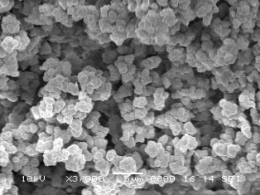
The generally accepted mechanism of pore formation in organic polymer monolihts during a typical polymerization in the presence of a precipitant is following [1,2]:
Categories
Monolithic stationary phases
As a new type of chromatographic stationary phase, monoliths have been subjected to intensive study in the last years. They differ from other supports mainly in their characteristic structure, which results in the improved chromatographic properties.