Because of lack of small pores it is difficult to separate small molecules with polymer monoliths in isocratic mode. We have prepared monolithic capillary columns and then hypercrosslinked them to afford a monolith containing an array of small pores [1].
Tag: stationary phase
Categories
CASSS dinner with Dr. J. Kirkland
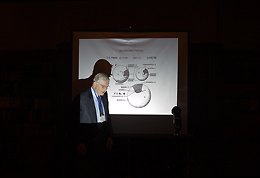
Yesterday, I had a great opportunity to participate in Discussion group organized by the An International Separation Science Society (CASSS). The main topic was the Scientific Achievements Award for one of the founders of modern HPLC – Dr. Jack Kirkland.
Superficially porous particles with thicker outer shells were used extensively for liquid-liquid chromatography [1] and as the support for early bonded-phase packings in reverse phase HPLC [2].
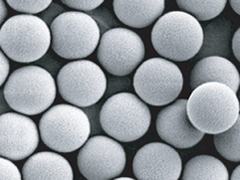
It is known that the kinetics of mass transfer in wide pore bonded silica can be slow, because of restricted intraparticle diffusion and, furthermore, remaining active surface sites can give rise to undesired interactions.